The impact of flow on the customer experience
Flow is the first and most decisive part of the self-service lunch experience—before customers even taste the food. When queues, counter stops, or payment take too long, people feel stress because lunch time is limited, and that pressure can start as early as leaving their desk. As a result, customers rush, choose the fastest queue over the best offer, and often skip extras like starters or desserts—reducing both satisfaction and average tray value. Poor flow also drives wasted labor, because teams compensate with extra staff instead of fixing the underlying design. Since flow is a connected system, improving one bottleneck can create another (for example, faster service can shift the problem to seating availability). Simulating scenarios with CaterFlow makes it possible to test changes safely, see their impact immediately, and optimize both customer experience and operational performance.
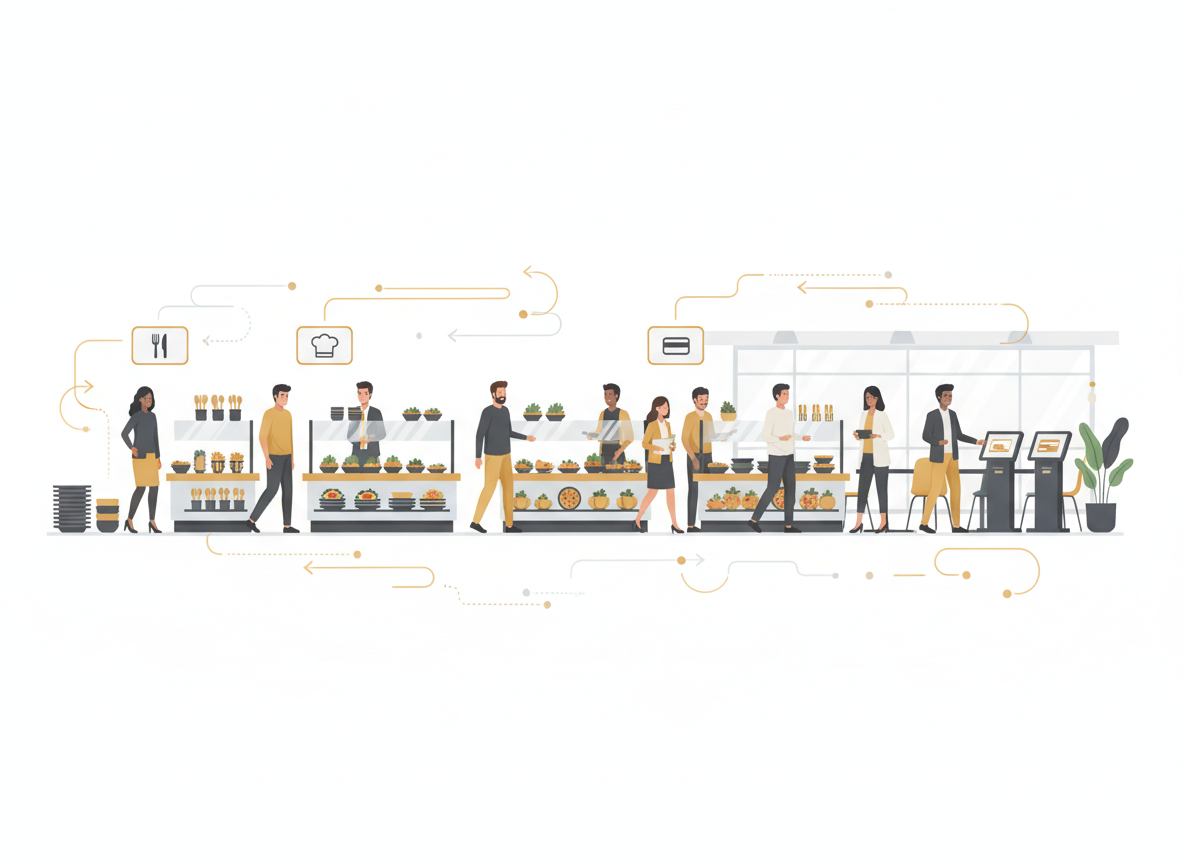
In a self-service restaurant, flow is not an operational detail—it is the first chapter of the lunch experience. Before a customer tastes the food, they experience the queue, the pace, the friction, and the stress level of getting served and paying. If that first part goes wrong, it creates a negative impression that even great food often cannot fully repair.
The self-service journey sets the tone
The freeflow/self-service area is the entry point to lunch. It’s where customers form their first judgement: “Is this going to be easy, or is this going to be a hassle?” When the flow feels slow, unclear, or chaotic, people don’t just feel inconvenienced—they feel pressured.
And because lunch time is limited, that pressure matters.
Limited time turns waiting into stress
Most workplace customers have a fixed window: meetings, deadlines, and return-to-desk expectations don’t disappear because lunch is happening. When people expect that serving and payment will take too long, stress can start before they even arrive at the restaurant.
You’ll often see predictable behaviors:
People leave their desk earlier than they want to “beat the queue”
They rush through the line, even if they would prefer to browse
They choose the quickest queue rather than the offer they actually want
They skip “optional” items (starter, dessert, extra drink) to reduce time
This has two direct consequences:
The lunch experience becomes less enjoyable because customers feel hurried.
Average tray value drops because customers avoid extra items.
In other words: a poor flow doesn’t only reduce satisfaction—it can reduce revenue.
Flow impacts staffing and wasted work
When a flow is badly designed, teams often compensate with people.
More staff behind the counters can help speed up service, but it’s also a sign that the system is working against you. If the layout forces unnecessary stops, unclear choices, or bottlenecks, you end up spending labor to “fight the design.”
A good flow doesn’t happen by chance. It happens by design.
What influences flow? More than you think
Flow is the result of multiple factors working together. The most common drivers include:
General layout (space, entry/exit points, aisle width, circulation)
Placement of offers (what customers see first, what causes hesitation)
Placement of service stations (trays, cutlery, glasses, condiments)
Number of stops (how many times customers must pause)
Number and location of payment stations
Number of people behind the counters
Complexity and serving time at each counter (portioning, customization, packaging)
Each of these factors affects the time customers spend in the freeflow area—and that directly reduces or increases the time they have to actually enjoy their lunch.
Flow is a system: changing one thing changes everything
Designing the right flow is a fine-tuning exercise. Every alteration can improve one part of the journey while accidentally damaging another.
A classic example: you improve counter speed and payment throughput, and suddenly you create a new bottleneck in the seating area.
If customers move faster through service and payment, more people enter the dining area at the same time. If seats don’t free up at the same rate, the restaurant shifts from “queue stress” to “seat hunting stress.” The customer still feels friction—just later in the journey.
That’s why flow optimization must be treated as a connected system, not a set of isolated fixes.
The advantage of simulating flow with CaterFlow
The best way to improve flow is to see the impact of change before you commit to it.
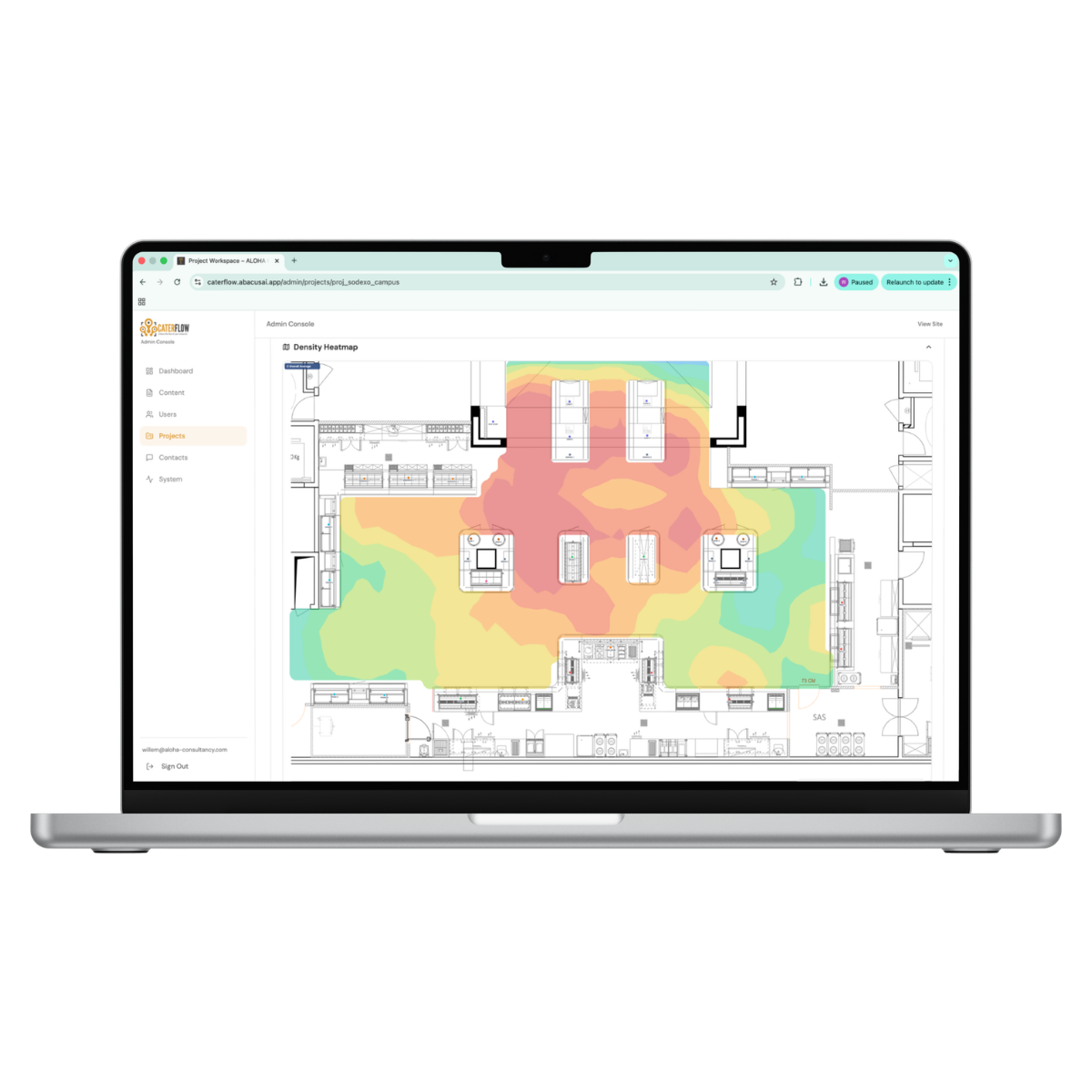
With CaterFlow, you can simulate the self-service journey and test “what-if” scenarios—layout adjustments, station placement, number of payment points, staffing levels, and service-time assumptions—without disrupting operations.
Key advantages include:
Immediate visibility of bottlenecks and congestion points
Faster decision-making because you can compare scenarios side-by-side
Lower risk: test changes virtually before spending time, money, or labor
Better customer experience: reduce stress, increase comfort, and protect lunch enjoyment
Better commercial outcomes: protect tray value and improve throughput
Flow is not just about moving people faster. It’s about removing stress from the start of the lunch experience—so customers can focus on what matters: enjoying their meal.
If you want to improve experience, efficiency, and performance, start where the experience starts: the flow.
See your own restaurant's flow, backed by data
ALOHA CaterFlow simulates your company restaurant so you can cut queues, remove bottlenecks and get a boardroom-ready action plan in 2–3 weeks.
Get started