The Importance of Data When It Comes to Flow (and Why Experience Alone Isn’t Enough)
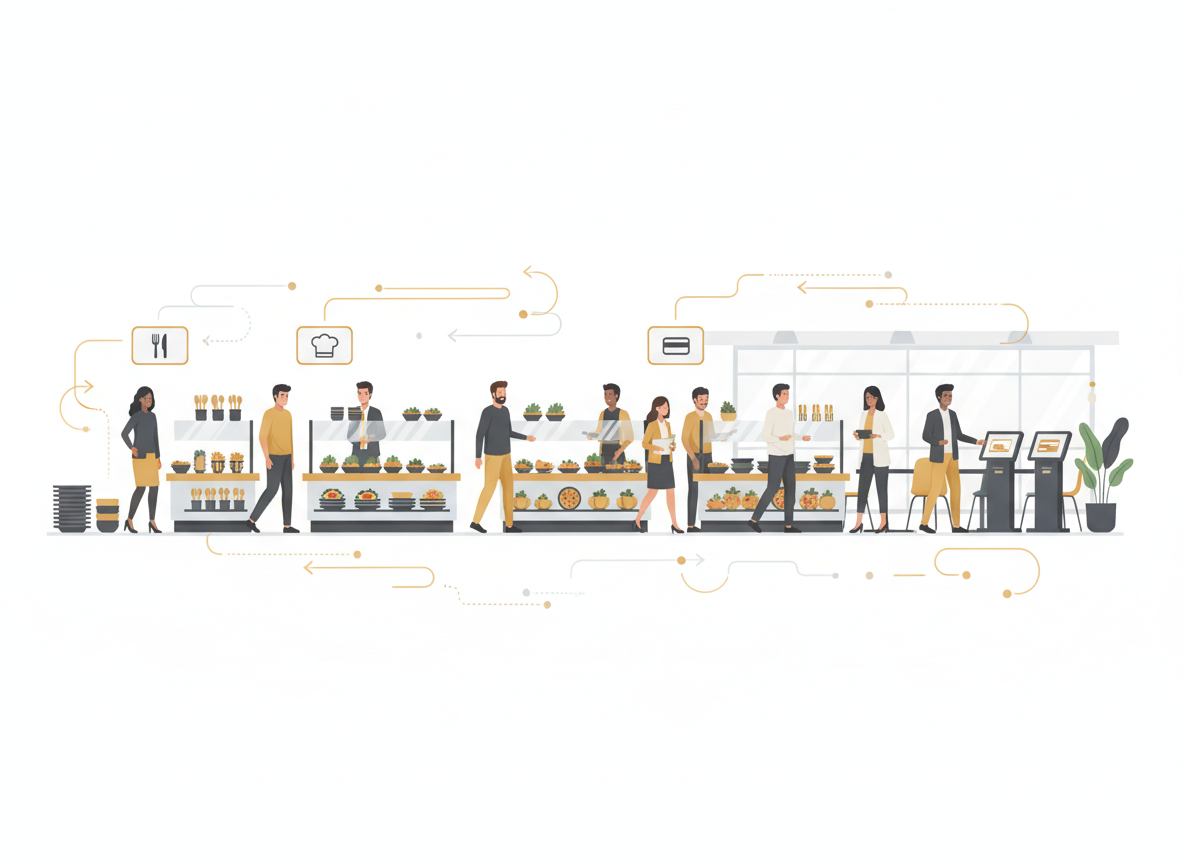
A self-service restaurant can have great food, a beautiful design, and the latest equipment… and still deliver a frustrating lunch experience. Not because the team isn’t good. Not because the concept is wrong. But because flow was treated like a detail instead of a measurable system.
The day a “perfect” plan went silent
A few years ago, I joined the defense of a catering tender for a large company. As part of the tender documentation, the client included the new restaurant plan they were about to build—an ambitious full renovation.
When I looked at the layout, I immediately saw multiple issues that would create bottlenecks: pinch points, counter placements that would force crossing traffic, service sequences that didn’t match how guests actually choose food, and a checkout flow that would inevitably slow down the peak.
So I did what I’ve always done: I analyzed the plan and listed every risk I could see that would negatively impact the flow.
During the tender defense, I shared those issues with the people in the room.
And then… silence.
Not because they disagreed.
Because the plan had been in the making for over a year. Equipment and appliances were already ordered. The project was too far advanced to change.
Someone finally asked: “What are you basing this on?”
My honest answer was simple: 25 years in catering. Years of seeing plans. Years of seeing the same mistakes. Years of watching how small layout decisions can turn the start of lunch into chaos—and how that chaos becomes a negative dining experience.
We won the tender.
And most of the flow problems I highlighted became very real.
The uncomfortable truth: flow problems are predictable
That experience stayed with me because it revealed something bigger than one project:
Many stakeholders involved in designing self-service restaurants don’t give flow the attention it deserves.
Layout decisions are often made without real operational data.
And when problems show up, it’s usually after the investment is made—when changes are expensive, political, or impossible.
Flow issues aren’t “bad luck.” They’re often the result of designing a restaurant like a drawing, instead of designing it like a living system.
Why experience isn’t scalable (and why data matters)
I’m lucky: I can often spot flow issues directly on a plan.
But relying on one person’s experience creates a gap:
What happens when that person isn’t in the room?
How do you align architects, kitchen builders, caterers, and the client around the same reality?
How do you move from “I think this will be a problem” to “Here’s what the data says will happen at 12:15 on a Tuesday”?
That’s where data changes everything.
Because flow is not just about space. It’s about behavior.
And behavior is driven by measurable inputs, such as:
Guest profiles (who is eating here, and how?)
Attendance patterns (daily peaks, hybrid work impact)
Sales mix (what people actually buy and in what sequence)
Service style choices (assisted counters, self-service islands, grab-and-go)
Checkout method (cashier, self-scan, mixed)
Without those inputs, a layout is guesswork—no matter how beautiful it looks.
The missing piece: testing scenarios before you invest
There’s another reason data matters: it allows you to compare options.
It’s not enough to say, “This area might create a bottleneck.”
The real question is:
If we move a counter, does it materially improve guest experience?
If we add a second checkout, does it reduce queue time—or just move the bottleneck elsewhere?
If we change the menu mix, does the layout still support the new behavior?
In other words: will the consumer actually feel the impact?
Because if the impact isn’t felt, you’re spending money to feel better—not to perform better.
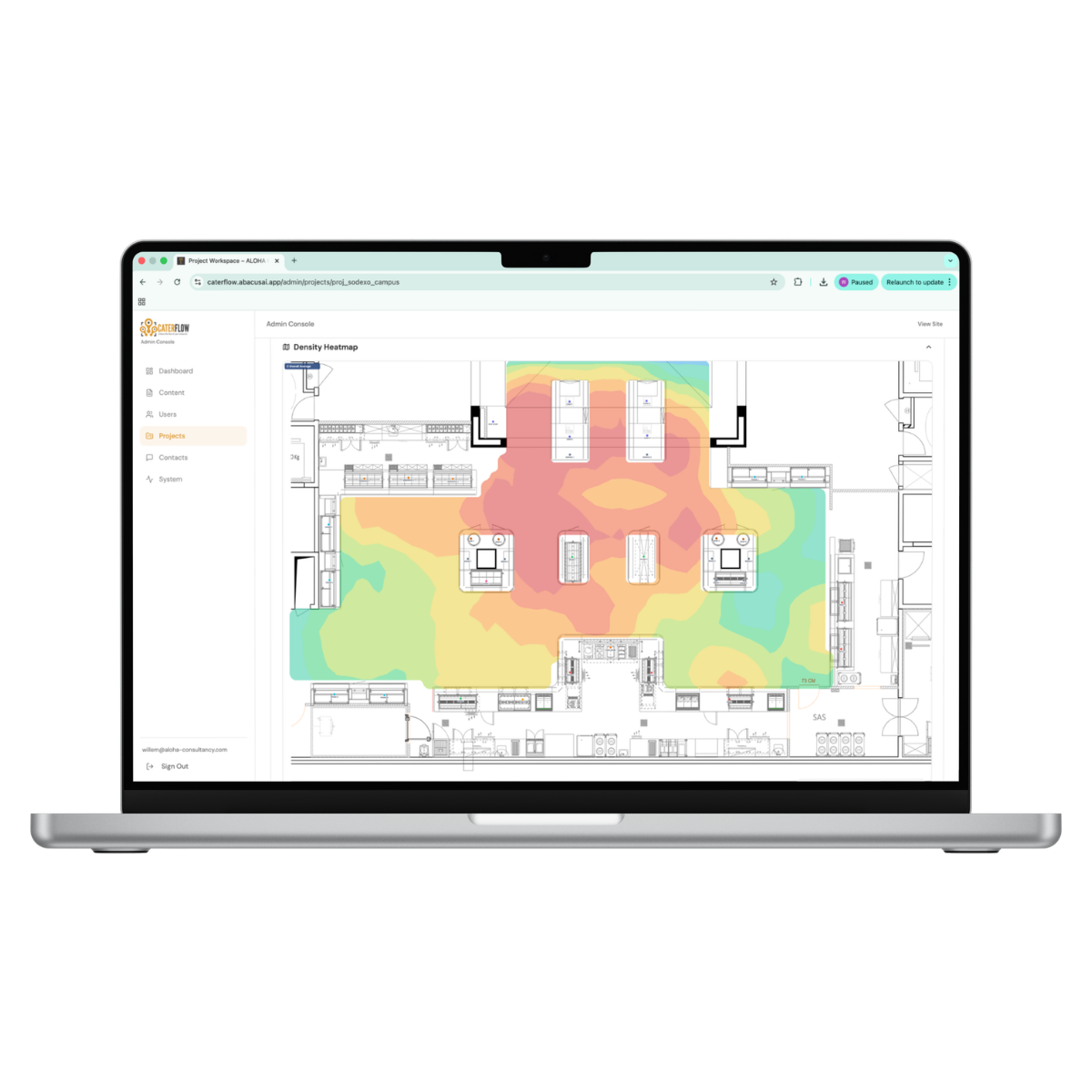
How CaterFlow was born
That tender defense was one of the moments that pushed me to build a system.
CaterFlow came from a simple idea:
Flow should be studied with the same seriousness as food cost, staffing, or equipment.
A flow study shouldn’t depend on having 25 years of experience in the room.
And teams should be able to test scenarios and understand the consequences before decisions are locked in.
Not to replace expertise—but to make expertise usable, shareable, and measurable.
Five years later: the same restaurant, the same issues
Fast forward to today.
The freeflow restaurant I studied back then still suffers from some of the major issues I highlighted in the tender phase.
The difference is that now, we’re not limited to opinions.
We’re going back with a full study to evaluate the different options available—and to understand what it would take to move the Flow score from a D to a B or even an A.
That’s the power of doing it properly: you can prioritize changes that actually move the needle.
What a “flow study” should mean in 2026
If you’re designing, building, or operating a company restaurant, flow should no longer be a vague discussion.
A proper flow study should help you:
Identify bottlenecks before they become operational problems
Quantify the impact of design choices on guest experience
Compare scenarios and investments with clear trade-offs
Align all stakeholders around one shared, data-backed view
A practical next step
If you’re a kitchen builder, architect, or caterer: consider making a flow study part of your standard proposal process. It’s one of the clearest ways to protect your client’s investment—and your own reputation—because the plan will be judged at peak lunch, not on presentation day.
If you’re responsible for a company restaurant: start requesting a flow study as part of any new project submission. Not because you want more paperwork, but because you want fewer surprises.
Because once equipment is ordered and walls are built, “we didn’t think about flow” becomes a very expensive sentence.
Final thought
Great flow isn’t an accident.
It’s designed.
And today, it can be designed with data.
See your own restaurant's flow, backed by data
ALOHA CaterFlow simulates your company restaurant so you can cut queues, remove bottlenecks and get a boardroom-ready action plan in 2–3 weeks.
Get started